
Hybrid small fission reactor pressurized Argon/Helium (or Xenon)capsule as ion powered stage; a NASA 2015 SBIR proposal
based on this link,
and this link
hypothesis ,
The SpaceX Dragon capsule pressure vessel with a known volume must have a known surface area, with a known volume surface area and a known M2 we can compute the gas law for the Dragon capsule with an Argon/Helium atmosphere and a small fission reactor radiator of 2.4 meter length at 250 C
We do not know what the ATM(pressure) of the Dragon capsule would be with the small fission reactor radiator or its energy translation to the Dragon capsule Stirling engine would be but gas law should allow for this and the black body heat to the Dragon capsules hull and its subsequent escape to space.
Many small fission reactor studies show that 10% of thermal heat becomes electricity and one study shows that more than half of the heat escapes through the small fission reactor through its radiator. I am thinking that a pressurized capsule that captures the radiators heat might improve this by an order of magnitude.
This may not be a good enough argument for two Dragon capsules docked to one another serving as a deep space probe SEP stage do to weight.
We hope in future to form a team to flesh out the gas law, heat translation to the spaceX Dragon hull and to the secondary Stirling engines
Small fission reactor and the pressurized capsule both power Ion powered SEP stage, the capsules trunk or service module doubles as a planetary probes SEP stage.
CON OPS, Trades,
possibly the stage and the capsule are pressurized with Xenon.
small fission reactor
electrical power from thermocouples (think RTG’s)
electrical power from small fission reactor stirling engines using fluids internal to reactor( see studies)
waste heat from small fission reactor radiator to capsule pressure vessel atmosphere using Gas Law,
capsule pressure vessel heated atmosphere powers secondary stirling engines
electrical power to trunk or service module that contains SEP Ion engines
remaining heat in capsule Argon/Helium atmosphere radiates out to space through capsule skin
as fission power system ages and cools Xenon pressurized capsule uses xenon as SEP fuel (less need for Xenon as coolant/heat sink)
service module/trunk shields reactor from science payload and avionics
Trades,
service module/trunk separates with first capsule retains reactor, science payload flys on,
service module/trunk separates with radiator, science payload with reactor flys on( reactor powers down to support science only)***
*** implies that second capsule is the science payload heading to deep space
Second capsule may be the with a heat shield capable of aerobraking to its planetary destination/
Centaur/Delta upper stage/DUUS/ACES duel chemical Ion powered hybrid small fission power in space stage
Hypothesis,
In space stage performs injection burn with LH2 and O2,use IVF thrusters and fuel cells to deplete remaining fuel.pressurized in space stage with Xenon in both tanks.Small fission reactor and radiator are housed inside LH2 and O2 tanks.small fisson reactor produces power in three ways, thermocouples,stirling engines and a second set of stirling engines in between the Xenon tanks. the second set of stirling engines uses heated xenon from the radiator “waste heat”
In space stage uses Xenon in tanks surrounding the reactor(shielding) to power ion engines after chemical engine cut off.We think a centaur small fission reactor ion power stage would be too heavy without the chemical boost phase
A large massive small fission reactor ion power in space stage makes since if it is in powered flight in the outer solar system for extended periods and/or it serves as a power plant after powered flight.It is helpful to retract the RL-10 engine aft skirt or engine nozzle to enable ion engine operations.
What needs to be done;
(A) model small fission reactor weight and waste heat to Xenon tanks with Gas law
(B) model Xenon heat to interior surface area of in space stage tanks and loss to space with black body radiation law
(C)we need to model stirling engines in between the two Xenon tanks as one tank will be hotter than the other!
(D) the radiator will displace LO2 so we need to stretch the LO2 tank
We know the values for the radiator heat rejection for various small fission reactors
or Brayton systems with Helium/Argon mix
AtlasCentaurExtensibilitytoLongDurationInSpaceApplications20056738
We do not know volumes for in space stages or the surface areas of the LH2 and O2 tanks for the exiting or proposed upper stages and in space stages please help!
TheAdvancedCryogenicEvolvedStageACES2006LeBar7454
some Centaur tank volumes in this dated paper,
TheCentaurUpperStageVehicleHistory
We still need tank surface areas to possibly compute heat loss with a heated pressurized Xenon atmosphere
this concept would work with in space stages docked to capsules or cargo vehicles re purposed as science/planetary probes.
Edit April 2014,
quote ,
” LH2 volume ~1,700 ft3
LO2 volume ~600 ft3
The Centaur tank sidewall is ~25 ft long and 10 ft in diameter. You can calculate the area from this.
We fly SOFI on the sidewall on all missions for insulation. Some missions also have MLI.
End Quote


I suggest that thermal heat from a molten salt fission reactor could heat a molten salt smelter, process heat from reactor is transferred to molten salt/metal ISRU smelter systems.
Many of the systems and methods used to remove heavy metals such as actinides and transuranic and noble gases from the molten salt reactors could inform us as to methods to remove elements from molten salt that has had ore added to it.Electrical energy from the reactor could power molten ISRU glass smelting systems.
Process heat from molten salt fission reactors and molten glass and salt ISRU smelting also makes possible the production of syngas.
The molten salt fission reactor is powering its own smelter for ISRU of transuranics!
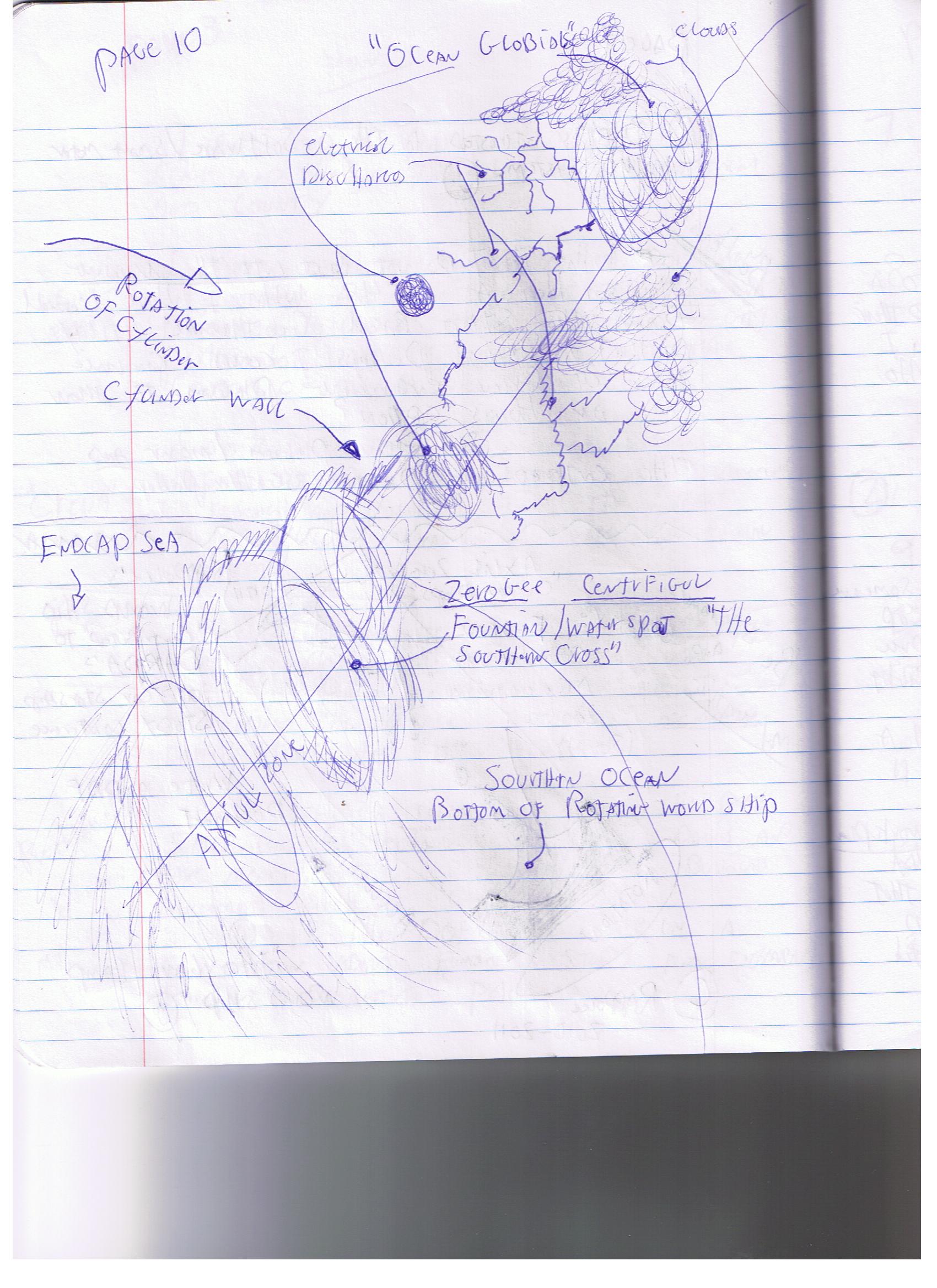
A rotating world ship with a circumpolar rotating axial micro gravity ocean questions;
A Lava Lamp generation starship or habitat!


Enhancing Blue Origins Biconic capsule cross range capability with inflatable deployable delta wings
Enhancing Blue Origins Biconic capsule cross range capability with inflatable deployable delta wings and applicability to other flight systems
This concept might also enable SpaceX and Boeing capsules additional cross range EDL and could be a concept that adds to the reuse and return of launch vehicle upper stages with or without a weight penalty trade space.Possibly allows service module/Trunk aerodynamic aerobraking and EDL.
Rapid Robust Design of a Deployable System for Boost-Glide Vehicles
and the inflatable winged atmosphere probe concept here,
Polidan_VAMP for STIM Meeting Jan 2013 – Final Approved
The paper below inspired me to take this idea intended for a strategic vehicle by the authors from Georgia Institute of Technology and add in ideas by NASA Ames and the office of the chief technologist that in vision deployable EDL structures for planetary missions.The idea in my mind is two-fold; Planetary EDL vehicles with cross range on steroids! and a trade space for launch vehicle stage reuse.The launch vehicle second stage with High re-entry speeds would serve as a test bed for both second stage reuse and planetary vehicles performing a EDL subsequent to hypersonic deceleration/aerobraking utilizing inflatable/deployable wing systems.
Rapid Robust Design of a Deployable System for Boost-Glide Vehicles
Centaur and other upper stage derived vehicles could utilize such inflatable winged systems to EDL or navigate planetary atmospheres. An upper stage derived planetary probe could, having exhausted its fuel be pressurized to provide buoyancy. Inflatable winged systems might provide the trade space for reducing the size and volume of purely inflatable systems such as balloon probes.
The upper stage could have brought with it its own payload which would be an orbiter.
Launch vehicle stages intended for reuse imply holding back fuel for the propulsive descent and it this that has a payload penalty, like wise an inflatable system be it a winged or a ballut also would have a weight penalty.A inflatable winged system would allow trades with a return from down range to a suitable infrastructure that enhanced cross range would allow.
Sub orbital inflatable winged systems testing would inform the state of the art to planetary probe EDL systems as well as human crewed ones. Sub orbital or orbital second stage inflatable systems would further inform us.
Inflatable winged systems could inform us as to the feasibility of aerobraking into LEO from L1, L2 and High lunar Orbit. This implies a EDL subsequent to aerobraking.Such high energy aerobraking from cis lunar space followed by EDL might make sense with scarce ISRU fuel to LEO combined with a smaller EDL winged vehicle.Utilizing cis lunar deployable winged vehicle test vehicles better informs us as to planetary systems aerobraking with a subsequent EDL.
repurposing spent stages as EDL and planetary probes is a more daring planetary probe trade space! The fuel tanks would be pressurized for buoyancy with a source of thrust to keep the flight system aloft in planetary atmospheres.
Many astrodynamic trajectory scenarios with sub optimal trajectories might be enabled by EDL followed by inflatable winged systems to correct for or enhance mission design.

A CARBON TAX FUELED SOCIAL SECURITY SOVEREIGN WEALTH FUND
To industrialize the inner solar system. Only a Carbon tax can both stabilize and reduce atmospheric CO2 and sustainably fund a social security system invested in the world capital markets on behalf of Future new-born children.
A Carbon Tax Fueled Social Security Sovereign Wealth Fund
State pension and social security schemes, including the American social security system, are under stress due to demographics and underfunding, and in the same breath according to measurements conducted by Keeling our planetary civilization is placing into the atmosphere more CO2 than has been present in the atmosphere in the recent geological past( Keeling 4 ). [TU1] Investing carbon taxes in the world’s capital markets for newborn children in a new transitional social security system holds out the promise of shoring up the existing social security system, but also creating a new sustainable social security system. A sustainable social security system is one that would not require tax increases so large in the future as to consume the entire federal budget, which is spent on defense, education, infrastructure and research and exploration, together called the discretionary budget. Failing to create a sustainable social security system means in the future retirees not receiving the full promised benefit. Investing taxes over time puts to work the magic of compounded growth rates in the worlds capital market places instead of taxing future taxpayers for future social security benefits. Only a tax on carbon is uniquely able to stabilize and reduce both the rate we are producing CO2 and to prefund existing and future social security schemes. Failing to enact a carbon tax will result in a century’s time, flooding of the worlds coastal plains where most of the Earth’s population lives and in climatic changes that might lead to crop failures and mass starvation. The American Social Security system is a pay as you go system with distinct parts created over time, starting with the Federal Old-Age and Survivors Insurance trust funds which came into force in 1940(OASIDI), along with the Disability Trust fund in 1956(DI) and Medicare in 1965(112th Congress 145 PDF). Pay as you go system is where a current social security beneficiary receives their benefit[TU2] from current taxes from people who are still working, the [TU3] surplus in fact buffers a pure pay as you go system with added income production something that may confusing to many. The Second World War provided with its mass production of armaments full employment for woman and minorities for the first time, as large numbers of the male workforce saw wartime military active duty (Herman 2). Full war-time employment benefited the new pay as you social security system as the economic boom that followed the war saw 16 million military personnel leave the service and become eligible for the generous educational benefit known as the GI bill(Rai). [TU4] 4 years of war also saw pent-up consumer demands for housing and household goods that were rationed during the war (Hyman 3). In the 18 years after the war, a record number of births occurred that we now call the baby boom generation (OASIDI 10). It is this demographic bubble born between 1946 and 1964 that saw many more workers paying into the pay as you go system then there where retirees receiving benefits. The pay as you go social security system developed a surplus.
The Discretionary budget, the creative force in our economy
At the end of the 1960’s, that vast demographic bubble of the baby boomers entered the world of higher education and work, adding creative energies to that of the generation born just before that ushered in the Apollo program at 5% of the federal budget in 1966. The Apollo program of exploration along with the Vietnam War and President Johnson’s “Great Society” enactments brought, “Government spending as a percent of GDP to its highest levels
Since the Second World War” (HISTORICAL TABLES 11). In the early 1970’s government spending as a percent of GDP started to drop, a compelling graph that depicts this overall drop in government spending is to be found in the “CBO’s 2011 Long-Term Budget Outlook” (Meyerson, Page, Topoleski, Figure 5.2 59). Post world war spending in the late 1960’s reached new heights in the sciences with the green revolution (CGIAR) and the exploration of the oceans and the inner space of the atoms (Federal obligations Table 1). These achievements along with the federally funded University research system and the arts and public broadcasting helped make our civilization on this continent what it is today (Public Broadcasting Service). These achievements may well be what have allowed our species on this planet to survive on this planet so far with 7 billion inhabitants. Compellingly all of these achievements were done with spending from the discretionary budget that shares and competes with spending from the social security and health care systems. We will now discuss how mandatory spending [TU1] programs such as health care and social security will become a greater portion of the GDP in the future and how this may put pressure on the discretionary budget in the times to come. At this point, we should discuss how this spending [TU2] level was achieved in the 1960’s and the relationship to the social security trust fund, which represents Federal Insurance Contributions Act, paid over the decades. Two of presidents Johnson’s “great society’ [TU3] programs where Medicare and Medicaid, establishing the Medicare Hospital Trust Fund in 1965 (overview history ).This surplus or the trust fund is invested in federal debt instruments or special interest rate treasury notes (Trust Fund Data Investment Holdings). The SSI trust fund is an important purchaser of federal debt and does not own any other kind of investment so the trust fund is itself a part of the national debt. As the surplus is exhausted, future taxpayers will have to redeem those treasury notes to pay future benefits or future taxpayers will have to borrow more in the form of future federal debt increasing the percentage of federal debt payment as a percent of GDP. As the Baby Boom generation enters retirement age, the demographic bubble in 2010 started to draw out of the trust fund more funds than is entering the trust fund in payroll taxes (OASIDI overview). In 2017, the rate of trust fund depletion will exceed the earnings from the interest on the treasury notes leading to fund exhaustion in 2037(OASIDI overview). When the trust fund surplus is exhausted, there will be only enough workers to pay beneficiaries two-thirds of the promised benefit levels. Future tax payers will have to redeem these notes that now amount to over $2 Trillion (SSA table) and as we shall see face a larger burden of increasing annual payments of interest on the national debt as a percentage of GDP((112th Congress 145 Summary figure 1). Future federal expenditures on “mandatory” items such as Social Security and Medicare will become a larger portion of future GDP, from 13.3% to 14.3% of GDP and 1.4% to 2.5% national debt payments as stated in a summary of the CBO Budget outlook 2012 to 2022. This discussion will now turn to that portion of GNP that we [TU4] spend on the national debt interest payments. The CBO’s 2011 Long Term budget outlook’s argument is that GNP is reduced by federal debt owed to foreigners (“congressional budget Office” 27), “GNP is reduced by net flows of interest and profits to foreigners And therefore better represents the resources available to U.S. households”……………………………. because part of the growing budget deficits projected for coming years would Be financed by inflows of capital from other countries.” Capital loaned to the American government from overseas represents interests earned to that country’s GNP. For this discussion, it is well to remember the opposite is true, assets owned outside the United States-by-United States citizens and earnings from those assets are a part of the American GNP, an important concept later on as we discuss sovereign wealth funds. An alarmist view held by Brookings Institute Author Julia B. Isaacs who uses CBO budget data to claim in 2050, Social Security, Medicare and Medicaid will rise to 18% of GDP, displacing the discretionary budget in its entirety (Isaacs 2). The GPO studies do not confirm such an alarmist view, but mandatory spending will tend to crowd federal spending on the “discretionary” budget in the future out to 2037 and beyond(CBO). (112th Congress 145 PDF). There have been innumerable studies by the Social Security Administration (SSA), Congressional Budget Office (CBO), AARP[TU5] Public Research Institute (Shelton, Alison) to determine or to suggest to lawmakers what could be done to prevent the trust fund surplus from depleting at 2037. Several are attractive in that they have the trust fund at 75 years from the present with stable or raising trust fund levels, called “Sustainable solvency” by the AARP/GPO/SSA researchers. Several combination of these ideas stabilize the trust fund beyond 75 years (Shelton, Alison Table 1 ).Many of these ideas have been researched by the AARP together with the congressional budget office and the chief actuary of the social security administration. We will not discuss all of them here as many of them penalize future beneficiaries with benefit cuts, a position we do not hold. The AARP study states that an increase of the FICA tax from today’s 12.4% to 14.1% would maintain a surplus through 75 years from the present, or “sustainable solvency”. Ms Allison’s paper discusses several alternatives to the 14.1% rate including taxing all earned income above the current maximum rate of $120,000 with a 3% FICA tax. Additional Benefits would be paid based on the new high income FICA rate (Shelton, Alison 2).The taxes from all income levels above the current maximum level of $120,000 would increase the social security surplus but the added benefit would start to diminish the surplus after 75 years. The CBO’s version places FICA taxes on earned income above the current maximum without a benefit increase (GPO policy options table 2).It should be noted that combinations of all of the above short of raising the FICA payroll tax to 14.1% could reach stated objectives of a 75-year sustainable solvency so why should we try to achieve more?
The Carbon Tax and social policy
The second major thesis of this paper is that society that is distracted by social inequality, poverty and low wage income will always find it difficult to sustain interest in exploration and economic utilization of our solar system.We propose to solve for these challenge of social inequality by dividing the $500 Billion annual Carbon Tax into two portions,$250 Billion per annum invested in the carbon tax social security sovereign wealth fund and is untouched for 76 years.The second annually collected $250 Billion is refunded annually through the use of the child tax credit,standard deduction,bridge card and other social programs.This is advocated by a Brooking s study THP_15WaysFedBudget_Prop11
CTC_Carbon_Tax_Model (4) (version)
Utilizing the CTC Carbon tax calculator we use the remaining $250 Billion per annum to refund to the taxpayer according to principles laid out in CBO and Brookings institute studies that advocate for returning carbon tax based on income.
Social security research studies to invest trust funds in the capital markets
AARP and the social security office of the chief actuary have studied the option of investing a portion of the trust fund in commercial paper or stocks and bonds. Investing 15% of the trust fund surplus would close the surplus gap over 75 years by only 9%. Investing 45% of the trust fund would reduce the shortfall by 26%. Investing often is about timing of the investment as well as how long a time investments are held. 2037, the year the trust fund exhausts its surplus is as of 2012, 25 years away(Unknown. Assets.aarp.org, 2013. Web. 24 Jan 2014. <http://assets.aarp.org/rgcenter/econ/i3_reform.pdf>).i3_reform Is it too late or too dangerous for this type of solution? The trust fund surplus owns special high yield treasury notes (Office of the Chief Actuary trust fund data), do stocks and bonds really outperform the 5% return of the treasury notes? Have stocks and bonds performed as well over 75 years? 07-01-ssoptions_forweb A compelling article by Amanda Cox concerning a book by Ed Easterling tells part of the story, “In Investing, it is When You Start and When You Finish” (Cox, Amanda). The new York times article’s interactive info graph depicts a color coded triangle the with years 1920 through 2010 as start years to invest a hypothetical $10,000 and by counting 20 years across the triangle to a calculated return or loss. Some twenty year periods yield no or little gain while others display a twenty-year boom cycle, in all a 4% to 5% gain over 90 years. The lesson to be learned from Mr. Easterling’s article is that 25 years from now that represents trust fund exhaustion may not be a safe enough interval to guarantee a return. We should read with caution Mr. Easterling’s article, it assumes a privately owned account, invested in the Wilshire 5000 a large cap index fund, dividends paid out, a management/brokers fee paid out, taxes paid and a 45 year working lifetime. A pension fund and government pension funds pay less of or none of these expenses, is perpetual, does not pay taxes, and reinvest dividends. Modern fund managers diversify their portfolio into domestic and world emerging markets and “small cap” stocks. Small-capitalized stocks are the smaller faster growing company.  We would make the argument that raising the FICA tax to 14.1 percent and investing this amount along with a 3% FICA tax on high wage earners (with a future benefit increase) in the capital markets would, over long periods perform better than treasury notes. Investing 45% of the existing surplus along with the suggested tax increases would create a social security trust that would have a large enough trust balance to provide for cost increases in the Medicare trust fund. carbon tax-SSI-retirement-calculator We argue that using the Carbon tax calculator, that $ 250 Billion per annum should produce in 67 years a $ 88 Trillion carbon tax social security sovereign wealth fund invested in the worlds capital markets. 77 years after the founding of the Carbon tax social security fund and ten years after payments begin 44 million retirees should be receiving a $1,500 per month supplementary social security benefit in addition to the existing social security system payments. 77 years after carbon tax enactment $ 1,500 monthly payment X 44 million people represents a $ 800 Billion additional injection into the economy! SSI retirement-excel-Final Carbon tax children pay into the existing social security system so that those of us alive today may receive the traditional existing social security benefit.The SNAP or food stamp program represents a 73 Billion annual program, half of these people are elderly or disabled.70 years after carbon tax enactment few of the elderly would be below poverty level or any where near poverty levels.This saves the taxpayers of the future these costs. 04-19-SNAP 7-29-13fa The Total of HUD housing programs in 2013 is $34 Billion, half of which goes to disabled and elderly beneficiaries.70 years after carbon tax enactment few of the elderly would be below poverty level or any where near poverty levels.This saves the taxpayers of the future these costs 7-17-13hous
Examples of invested sovereign wealth funds/social security systems
.
National Railroad Retirement Investment Trust
In 2001, congress created the NRRTT or the National Railroad Retirement Investment Trust. Over a two-year period, treasury notes were redeemed and index stocks such as the Wilshire 5000 where purchased (Kevin Whitman Social Security Bulletin Vol. 71, No. 2, 2011). Railroad workers are not covered by the social security system. The stock portfolio is invested to provide a social security equivalent benefit and an additional annuity (Kevin Whitman Social Security Bulletin Vol. 71, No. 2, 2011). reportFY2012 appendicesFY2012 reportFY2011
The Canada Pension Plan Investment Board
The Canadian Pension Plan Investment Board like New Zealand will not be called to pay a small portion of Canadian beneficeys until 2021 so that it might grow in value over the next ten years. Similar to the New Zealand plan the Canadian pension plan is funded with government surpluses and a payroll tax. 17 million contributors and a $148 Billion in fund assets equal $8,705 per contributor. cpp25_e CPPIB_ARsummary_2011
The Alaska Permanent Fund Corporation
The Alaska permanent fund corporation or APFC is mandated by the constitution of the state of Alaska with the responsibility of investing fossil fuel royalties into a fund invested in the world capital markets. According to the APFC annual report, “beneficiaries of the Fund are the State of Alaska and all present and future generations of Alaskans”. The APFC must invest the principal in perpetuity and inflation-proof the growth of the principle (Annual report 26). In the last 27.5 years, the Alaska permanent fund has averaged 9.1 % growth rate. The Alaska Permanent Fund assets in 2011 were $40 Billion, or $56,000 per Alaskan. The Alaska permanent fund corporation is our introduction to the carbon tax based sovereign wealth fund that has many goals not exclusively pension related. APFC Annual Report 2011
Norwegian Government Pension Fund
Despite its name the Norwegian Government Pension Fund is not legally obligated to any state pension plan but is a “general savings” plan that could be used in the future(general pension plan box 2.1) the Norwegian Government Pension Fund has over $600 Billion in assets. The fund was established in 1969 to benefit from North Sea oil discoveries and the fund’s assets are a testament to the power of growth compounded over many decades. If divided between each Norwegian citizen this would equal more than $100,000 per person. The Norwegian government has an ethical investment policy in place that forbids investment in manufactures of mass destruction, cluster bombs and mines, tobacco. Future corporate governance policies in company’s equities shall include growing the global economy to end hunger and to invest sustainably to further the environment (Strategy). All of these fossil fuel based sovereign wealth funds have the luxury of externalizing the “carbon tax” to consumers outside their territories as is the case with the sovereign wealth funds in the middle east. The sovereign wealth funds discussed so far are signers of the Santiago declaration that governs fund transparency in disclosure to the public. Fund annual reports, fund investments, and fund governance must be open for all to see. The funds discussed so far all have rules of governance and are run by independent managers who report the annual results to a governing board. Independent managers may mean a reduced political interference in investments from politicians but this does not mean a fund need be free from ethical and policy considerations in where to invest or in corporate governance in companies, it owns shares in. Governance of the Carbon tax Sovereign wealth fund We propose that a permanent joint committee of the Federal Reserve Board and the social security trust fund board would provide stability to the fund and to the funds uses.The funds uses over decades would be vast as described below.Fund investments could provide full employment and could be trimmed back during times of inflation.The fund could be a stabilizing force during times of crises.
Carbon tax that serves a dual purpose
Keeling among many other scientists report on the recent and substantially large increases in atmospheric CO2 levels in the last century and as compare to the last 400,000 years( Keeling)The cap and trade ideas over putting a market place price on carbon emissions is showing some doubt in light of dishonest third world transactions and lack of transparency. Even here in the first world the dishonesty and lack of regulations in our recent securities markets collapse puts cap and trade as suspect. The carbon tax center advocates that a carbon tax at the point of extraction from its source is the more honest and transparent form of market price on carbon that would influence the consumer to reduce consumption (Carbon Tax Center) . We have used the carbon tax interactive excel spreadsheet by Komanoff to exhaustion in an attempt to model a gradually increasing carbon tax level(Komanoff spreadsheet). The goal was to model a carbon tax that reduced CO2 emissions or reduce carbon consumption by consumers but that also did not result in a drop in revenue from a carbon tax decades from now. Several scenarios used by Komanoff sharply increase carbon taxes and CO2 production but by 2032 the carbon tax starts to fall very slightly. The reason for preserving the carbon tax revenue over time is to invest it in the capital markets to endow future newborn children who would draw a supplemental social security benefit from it in 65 years time. Lessons learned from the sovereign wealth funds discussed above are that it would take a century of compounded growth to replace any existing pay as you go system. Online calculators such as (moneychimp) and (Vertex42) confirm this. First we must discuss carbon tax and revenue levels Using the Komanoff carbon tax calculator. With a starting tax of $6 per ton of CO2 and raising by $2 per ton per year and a stable 20 cents per gallon on all liquid motor fuels in all years (not heating oil)results in, $69 $108 $146 $184 $222 $260 $298 $335 $372 $408 $446 $483 $559 $558 Billion in each of the 14 years. Adjusting motor fuel taxes upward or other combinations of the carbon tax could offset CO2 emissions levels falling after 14 years. In the alternative, we could simply never allow the carbon tax to reach levels of over 500 billion per year. We seek a balance with CO2 reduction and at least 90 years of a $300 Billion per year carbon tax for the proposed social security sovereign wealth fund. Utilizing moneychimp and investment calculators, we assume 3 years after enactment of a carbon tax to have available $200 Billion per year every year for allocation to that year’s newborn child. Roughly, 4 million newborn children are born every year in the United States and this would equal to $50,000 per child. The child would not have an ownership interest; this represents an endowed principle to all future children. $50,000 at 7.5% minus 3% inflation rate will grow to $825,000 in 65 years enough for a modest retirement if we meant to deplete this amount over a twenty-year retirement but we do not intend this. All of these carbon tax children must pay their 14.1% payroll tax to the pay as you go system and we are trying to grow a new social security system after the carbon tax revenue dwindles. The way forward is to maintain the existing SSI system for at least twenty years after the first carbon tax child reaches 65. At 65 the first carbon tax fund child would be entitled to 10% of the interest earned off the $825, 000, this would only be $7,000 but this is a supplement to the normal pay as you go benefit, which is the intent of the Canadian, New Zealand, and Norwegian funds. The $825,000 must be made “safe from inflation” in the words of the Alaska permanent fund so that over the 20 years of retirement of the first carbon child the $825,000 will grow slowly to $1,700,00, even after accounting for 20 years of reduced earnings due to benefits payments. Assuming that this beneficiary has had two children and 4 grandchildren or 6 people dividing by $1,700,000 equals $280,000. In reality, we think a combination of carbon taxes, the 14.1 % payroll taxes that now accrue to the invested fund after the pay as you go beneficiaries have passed away, and the inflation-protected principle will allow for a perpetual fund in the next century that no longer needs carbon taxes. Macroeconomics; (A) (1)Real growth rates of a fund that equals 1/5th of the world GDP in 70 years will never be more than a few percent above inflation if invested solely in terrestrial market securities and infrastructure. The fund may grow much faster in the early years though due to worldwide market opportunities and diversity in investments. (A)(2) The fund will not grow fast and large enough to replace social security payroll taxes in until at least 85 years after enactment, therefore it will be for the first 50 to 60 million carbon tax children will receive a supplemental benefit from the carbon tax sovereign wealth fund and they will pay into the existing pay as you go social security system. The supplemental benefit may free many from poverty and may free the government and future tax payers from paying for poverty programs for the elderly. The carbon tax children therefore will continue to pay into the existing social security system and receive a benefit from the existing system that itself needs repairs. (A)(3) We would repair the existing social security system by enacting a 1.8% FICA payroll increase; the increase would also be invested in the world capital markets. The CBO and AARP research shows this extends the solvency of the system beyond 70 years from now. (B)(1) the carbon tax center is made up of some bipartisan elected officials who argue that a $500 Billion per year carbon tax has to implemented gradually and that all of it must be returned each year to the tax payers in some fashion, we would not adhere to this exactly (B)(2) We would agree with this approach with several provisos; The carbon tax social security sovereign wealth fund would accrue $250 billion per year for decades so this would leave $250 Billion to refund every year, we would refund it in a progressive fashion, we would base refunds on the child and work credits combined with a larger standard deduction for the upper middle class. A larger percent of poor and working poor would pay no taxes; middle class folks would receive some relief. Middle class citizens based on the number of children in the family would benefit from both child and work credits and a larger standard deductions. (C)(1) The carbon tax social security sovereign wealth fund and investment and industrial policy; The government of France has since the second world war owned a large fraction of the nation’s economic output much like the UK. Both nations go through cycles of how much of the economic output is owned by the citizens and how much is private sector. France; banking and energy, the UK energy and healthcare system. We shall discuss here the French power distribution company and the nuclear reactor building entities. Since 1974 the French state industrial policy has been to free the nation from fossil fuel dependence, the French did so with a massive building project of over 50 nuclear power plants, these power stations have been amortized on a commercial basis with power sales to the people of France. This includes the cost of plant and operations but not the fuel cycle. The French state has differed into the future the costs of reprocessing all of the spent waste and any geological burial of whatever might be left. Here the interests and technology of the French state and the United States and Canada converge into a unique synergy. (C)(2) Conventional reprocessing of spent nuclear fuel back into conventional nuclear fuel has economic limits as the French might admit; there is a third interim option that might act as a bridge to future reactors that can burn all nuclear waste as fuel. The third option offers a chance to burn spent fuel from existing reactors to a low degree of destruction but complete amortization of plant and equipment through power sales. This opportunity has many attributes to offer; one is that building 50 to 70 heavy water reactors over 20 years is a major economic stimulus. Heavy water reactors burning spent fuel is “de facto” interim storage of spent fuel from existing reactors!50 to 70 reactors built over 30 years would take a century to burn the spent fuel from our nation’s 105 PWR reactors. This ‘buys” us time to decide the next step! Burning the spent PWR fuel in a fleet of heavy water reactors also pays a consumer fee into the decade’s old civilian nuclear waste trust fund. This fund now has $30 Billion in assets currently; we argue that the this fund with future payments from nuclear rate payers from heavy water reactors should be governed and invested by the social security sovereign wealth fund, why? By deferring a geological disposal by a century, we allow the civilian waste trust fund to grow into hundreds of billions of dollars and this to allow a future decision as to what to do as to investing in a follow on technology. Indeed a century of earnings growth allows the civilian waste trust fund to become a builder and investor in that next generation reactor along with the carbon tax sovereign wealth fund. nuclear-spent-fuel-trust fund-calculator (C)(3) what would be that next generation reactor? We argue that the heavy water reactor can use on site the spent fuel from the PWR reactor, therefore we would collocate heavy water reactors with the existing PWR reactors. so it is with the molten salt reactor.
Carbon tax invested in a fleet of heavy water and molten salt reactors on behalf of all future new-born children
Taxing carbon to build a carbon free fleet of nuclear reactors that pays a dividend to all future new-born social security recipients 70 years from now we believe is an elegant solution, it is the ultimate in industrial policy and Keynesian models.We argue that investing less than 10% of the$250 Billion per year of the carbon tax in a reactor program and 10% of the earnings of the $250 Billion invested the world’s capital markets in a reactor program solves multiple societal issues; namely Carbon Emissions, pre funded future social security benefits and a $ Trillion nuclear build program that primes Americas employment rates for decades.
Investing a carbon tax into a social security sovereign wealth fund for unborn children of the future and building nuclear reactors with the invested funds is the beauty and ultimate irony of this plan
carbon tax-SSI-retirement-calculator
CTC_Carbon_Tax_Model (4) (version)
Carbon tax wealth fund document discusses the prudent person rule, never invest more than 5% of a retirement funds asset in more than one asset, this means a slow nuclear reactor build-up leading us to rely more on the carbon tax to reduce Co2 emissions. On the other hand, a slow reactor build-up and a fast build-up of investments in world capital markets in the early years should improve small-cap and emerging markets growth rates for the carbon tax social security sovereign wealth fund. We also believe an early rapid reactor build up in the early years could yield an inflationary environment. (Overly exuberant reactivity build the program!) Outside the American nuclear reactor build program would be to build a fleet of reactors outside the United States but due to the 5 % rule this could not occur until 20 years after carbon tax enactment. SSI retirement-excel-Final 16 to 19 years after enactment of a $250 billion carbon tax invested growth equals the annual tax carbon tax. The CTC carbon tax model predicts a decline in Co2 emissions so we compute a total of $14 Trillion in carbon taxes over 30 to 40 years which should yield a total of $88 Trillion in 70 years.Google predicts a 3% world GNP growth rate the next 70 years, how do we predict a sovereign wealth fund that is 1/3rd “more” of what the world GNP would otherwise have been? what is the economic effect of 70 years of taxation investment in the world and national GNP? If the sovereign wealth fund is 30% of the world’s GNP over 70 years is this a real increase of world GNP growth rate? or has this investment “displaced” or been diluted by the google predicted 3%? We predict not, The social security sovereign wealth fund becomes brick and mortar investments over the decades, indeed carbon tax avoidance by consumers inside the unite states leads to growth, growth fueled by the employment of the armies needed overtime to build American domestic reactor fleet.For the world economy, this might mean a growth rate of 4% over 70 years instead of 3%.
Space-based solar power fleet a $1 Trillion bet
We would want to model a $250 Billion carbon tax VS a Space-based solar power system, such a system is by all measures a very expensive system to deploy. A $250 Billion per year carbon tax is such a subsidy to a SBSP as it would be to any green terrestrial system. we need a consumer of services to build such a system outside the SBSP and that would be a worldwide agreement to explore the inner solar system. ISS partners agree to use commercial models to field a human Mars project, this Fields a fleet of fuel depots and ion tugs. These are needed due to economic studies that indicate that earth deployed SBSP systems are not economical, Lunar resource-based SBSP might be.The Lunar resource-based SBPS would still be a program 4 times larger($ 500 Billion ?). NSSJOURNAL_AnalysisOfONeill-GlaserModel_2011 The NSS Journal is most likely guilty of SBSP exuberance! but perhaps a case can be made for the Carbon tax social security sovereign wealth fund owning a 15 to 20 % of all of the service providers to this project but the SBSP system itself after 70 years generates positive cash flow but can never recover the initial capital costs. aerospace Soresini
A $88 Trillion Social security sovereign wealth fund,its effects explained in Macroeconomic theory? It should be obvious that it would not be possible to invest such large sums inside the united states, particularly ten to 15 years after enactment when the earnings on the fund would exceed the carbon tax itself or $1 trillion per year.Mutual funds invested in small caps have historically have been challenged in keeping up high earnings when they become too large why? the social security sovereign wealth fund would in 20 to 30 years become a significant percentage of the worlds GDP what happens to world GDP in this case? an increase?The fund’s initial investment has to come from somewhere, taxation.$250 billion per year is refunded to the people in my plan the other $250 billion goes into the fund.My thoughts are that investing in nuclear might provide a low return but it also might moderate inflationary tendency of spending too much in construction in the American economy in any given year Steigum
12 carbon tax gale 11-13LowIncomeOptions I propose something similar to the carbon tax center refunding the tax but only to the poorer among us
ANNUAL REPORT 2011 [TU6] SUMMARY.” Canadian Pension Plan (CCP) Investment Board. CCP Investment Board, 2011. Web. 31 Jan. 2012. <http://www.cppib.ca/files/PDF/CPPIB_ARsummary_2011.pdf>. Actuarial Publications; Proposals Addressing Trust Fund Solvency. Office of the Chief Actuary, 2 Dec. 2011. Web. 17 Jan. 2012. <http://www.ssa.gov/oact/solvency/index.html>. Actuarial Publications; Provisions Affecting Trust Fund Investment in Marketable Securities. Office of the Chief Actuary, 10 Jan. 2012. Web. 17 Jan. 2012. <http://www.ssa.gov/OACT/solvency/provisions/investequities.html>. Carbon Tax Center. Ed. James Handley. Carbon Tax Center, 2012. Web. 19 Dec. 2011. <http://www.carbontax.org/>. Cox, Amanda. “Metrics; in investing, it’s when you start and when you finish.” New York Times 2 Jan. 2011: 4(L). Gale Power Search. Web. 3 Feb. 2012. Federal obligations for research and development, by character of work, and for R&D plant: FY 1951–2009 TABLE 1. (Corrected August 2011).”National Science Foundation/Division of Science Resources Statistics. National Science Foundation, Aug 2011. Web. 22 Feb 2012. <http://www.nsf.gov/statistics/nsf10305/pdf/tab01.pdf Frequently asked questions.” Carbon Tax Center FAQ’s. Ed. James Handley. Carbon Tax Center, 2007. Web. 19 Dec. 2012. . Geithner, Timothy F., Hilda L. Solis, Kathleen Sebelius, Michael J. Astrue, and Charles P. Blahous III. “A SUMMARY OF THE 2011 ANNUAL SOCIAL SECURITY AND MEDICARE TRUST FUND REPORTS.” Office of the Chief Actuary. Social Security Insurance, 2011. Web. 21 Dec. 2011. . Goss, Steve, Alice Wade, and Chris Chaplain. “Estimated Financial Effects of Several Social Security Reform Options.” Office of the Chief Actuary. Social Security Insurance, 19 June 2008. Web. 18 Jan. 2012. <http://www.ssa.gov/oact/solvency/AARP_20080619.pdf>. “Gross Domestic Product.” International Encyclopedia of the Social Sciences. Ed. William A. Darity, Jr. 2nd ed. Vol. 3. Detroit: Macmillan Reference USA, 2008. 383-384. Gale Virtual Reference Library. Web. 3 Feb. 2012. Komanoff, Charles. “carbon tax spreadsheet.” Carbon Tax Center. Ed. James Handley. Carbon Tax Center, 2007. Web. 19 Dec. 2011. <http://www.komanoff.net/fossil/CTC_Carbon_Tax_Model.xls>. Herman, Arthur. “The Ultimate Stimulus? World War Two and economic growth.” Weekly Standerd. 12 Sept 2011: n. page. Web. 22 Feb. 2012. <http://www.weeklystandard.com/articles/ultimate-stimulus_592145.html>. Hyman, Louis. “How Did World War II End the Great Depression?: Echoes.” BLOOMBERG 16 Dec 2011, n. page. Print. <http://www.bloomberg.com/news/2011-12-16/how-did-world-war-ii-end-the-great-depression-echoes.html>. “HISTORICAL TABLES.” Historical Tables: Budget of the United States Government Fiscal Year 2005. U.S. Government Printing Office, 2005. Web. 10 Mar 2012. . Kelling,. “KEELING CURVE LESSONS.” Scripps Institution of Oceanography. Scripps Institution of Oceanography, 2012. Web. 22 Feb 2012. <http://scrippsco2.ucsd.edu/program_history/keeling_curve_lessons_4.html>. Lind, Michael. “How conservatives lie about government.” SLATE 24 Jan. 2012. Web. 3 Feb. 2012.<http://www.salon.com/2012/01/24/how_conservatives_lie_about_government>. OASIDI Board of Trustees, . “2011 Annual Report of the Board of Trustees of the Old-Age and Survivors Insurance and Disability Insurance.” Social Security Administration. U.S. Government Printing Office, 2011. Web. 22 Feb 2012. <http://www.ssa.gov/oact/tr/2011/tr2011.pdf>. tr11summary tr11summary “overview history.” Centers for Medicare & Medicaid Services. N.p., n.d. Web. 10 Mar 2012. . “CBO’s 2011 Long term outlook.” Congressional Budget Office. CBO, n.d. Web. 10 Mar 2012. . Public Broadcasting Service and Subsidiaries,. “PBS/2010/Annual Report.” consolidated financial statements and independent auditors’ report. Public Broadcasting, 2010. Web.22Feb2012.<http://www.pbs.org/about/media/about/cms_page_media/29/2010PBSFullFinancialReport.pdf> Shelton, Alison. “Reform Options for Social Security.” AARP Public Policy Institute. AARP Public Policy Institute, Apr. 2008. Web. 18 Jan. 2012. . “Social Security Policy Options; A CBO Summary.” United States congress; congressional budget office. Congressional budget office, July 2010. Web. 18 Jan. 2012. . Social Security Policy Options; A CBO Study.” United States Congressional Budget Office. Congressional Budget Office, July 2010. Web. 18 Jan. 2012. <http://www.cbo.gov/ftpdocs/115xx/doc11580/07-01-SSOptions_forWeb.pdf>. Shelton, A.. “Reform Options for Social Security.” Reform options for social security. AARP Public Policy Institute, 2008. Web. 10 Mar 2012. <http://assets.aarp.org/rgcenter/econ/i3_reform.pdf>. Rai, K.. “Did the gi bill of 1944 produce persistent effects on the us economy?.” Virginia.edu. N.p., 2009. Web. 10 Mar 2012. <http://people.virginia.edu/~kr9c/print/imfprint/gijobmkt.pdf>. Sovereign Wealth Fund Institute. Sovereign Wealth Fund Institute, n.d. Web. 16 Jan. 2012. <http://www.swfinstitute.org>. The Alaska Permanent Fund 2011 Annual Report.” The Alaska Permanent Fund Corporation. The Alaska Permanent Fund, 2011. Web. 18 Jan. 2012. <http://www.apfc.org/_amiReportsArchive/APFC%20Annual%20Report%202011.pdf “The CGIAR at 40 and Beyond Impacts that Matter for the Poor and the Planet.” .” Consultative Group on International Agricultural Research. Consultative Group on International Agricultural Research, 2011. Web. 12 Mar 2012. <http://www.cgiar.org/pdf/cgiar@40_final_LOWRES>. Office of the Superintendent of Financial Institutions, . “Twenty-Fifth Actuarial Report on the Canada Pension Plan.” Actuarial Report 25th of the Canada Pension Plan as of December 31 2009. Minister of Public Works and Government Services, 2010. Web. 12 Mar 2012. <http://www.osfi-bsif.gc.ca/app/DocRepository/1/eng/oca/reports/CPP/cpp25_e.pdf>. “Trust Fund Data.” http://www.ssa.gov. Social Security Online, 11/1. Web. 10 Mar 2012. <http://www.ssa.gov/cgi-bin/investheld.cgi>.
Dual Capsule planetary missions ( Red Dragon 1.5)
One Dragon trunk two Dragon capsules docked together the leading capsules heat shield provides aerobraking
RED DRAGON-MSL HYBRID LANDING ARCHITECTURE FOR 2018 (4216 ) This paper gives the weight of the Dragon rider capsule, hard to find information.
Key points from the Dragon-MSL hybrid paper;
7200-kg entry mass( did this author add or subtract the trunk?)
Two Dragons docked together should weigh twice this( our thoughts)
a direct entry into the atmosphere at 6.0 km/s
The Dual capsule Dragon flight system allows aerobraking, aerocapture followed by subsequent EDL for one or both Dragons some days later.
This system allows for the trunk and retracted solar arrays to survive aerobraking and to allow for the mass production of Mars Exploration Rovers (MER’s) We save the weight of MER cruise stage, Backshell/heat shield
We place three externally mounted MER’s to the Dragon that are released as weights during EDL , this means that three MER’s have landed close to one another a problem wich we will discuss shortly. On board the Dragon are two more MER’s! and a ISRU machine to allow the MER’s to be relocated further from the initial landing site by the Dragon hopping to move its MER brood.
transform the mars lander network to a rover
Dragon power plant ; Small Fission reactor pressurized vessel hybrid power system
Small fission reactor generates electricity using thermoelectric couples
Small fission reactor radiators are inside the Capsule pressurized vessel that normally would host our human crew. This pressure vessel has a Helium/Argon atmosphere and circulates heated Helium/Argon through a sterling engine .Perhaps the Sterling engine and the small fission reactors radiator could use a second capsule docked to the first as a stirling engine heat sink?
Larger space based fission reactors could dump heat into the pressurized volumes in a Cygnus docked to a Dragon capsule.
Dragon dual capsule pressure vessel with Helium/Argon recovers heat from the radiator heat source
We use two Dragon capsules to recover heat to electricity three times, thermoelectric Stirling and lastly our Dragon capsule with the Helium/Argon with a secondary Stirling. The small Fission reactor radiator is housed inside the Pressure vessel!
7 M3 of cargo volume in the Dragon pressure vessel
2.5-m-long radiator panels
Dragon Capsule pressure vessel is 2.9 M long
A Small Fission Power System for NASA Planetary Science Missions NASA TM-2011-217099 – 1Dec11 25pp 20120000789_2012000894
Update 21 March 2014;
Icarus intersteller has a new post up in regards to Fusion engine radiators, I have borrowed some of their spreadsheets
http://www.icarusinterstellar.org/a-plumbers-guide-to-starships/
Plumbers guide to Starships-Liquids
Plumbers guide to Starships-Radiators
If a small fission reactor radiator transfers latent heat to a Helium/Argon atmosphere inside a Dragon or Cygnus how much is lost to the spacecraft hull before doing useful work in a stirling or Brayton engine?
A small space based molten salt reactor as suggested here by Michael Eades,
Eades_Michael_Honors_Thesis (1)
would if used in the two capsule hybrid power plant create exceptional thermal energy that would put any Helium/Argon atmosphere under some pressure.We would need to know the capsule rupture pressure state.Conceivably the capsules could use Xenon as stirling engine working fluid and could double as a fuel source for solar electric propulsion ion engines.
Hypothesis; How much Liquid methane from a CBC can be cross feed into a liquid Hydrogen Core stage with out modifying the core engine?
Much work and talk on Methane powered launchers(SpaceX,
Much work and talk on LH2/LO2 systems and Fuel depots(ULA)
Some talk on Hypergolic fuel depots
all of these make sense but involve R & D costs and may have some incompatibility issues with one another. I propose we look more carefully at this paper,
http://www.grc.nasa.gov/WWW/Fuels-And-Space-Propellants/GELLED.htm
I call the concept mixed Liquid Hydrogen slush Methane systems…………………………………
Mixed LH2 gelled with CH4 for fuel depot
Mixed LH2 gelled with CH4 for SLS CBC
Mixed LH2 gelled with CH4 for Falcon heavy
Mixed LH2 gelled with CH4 for a Blue Origin heavy
Mixed LH2 gelled with CH4 for a Delta V heavy
Mixed LH2 gelled with CH4 for CBC only with a LH2 cental core stage for all of the above.
Update 22 March 2014,
At what ratio could you mix/crossfeed LH2 gelled in a CBC with a LH2 only core without modifying the central cores LH2 engines?This could open up several trade scenarios, The core performs best at high altitude, the denser gelled fuel performs best at launch.Cross Feeding would be done at mix ratios as to not have to modify the core engines as discussed above.The other trade is to gell Alkanes with LH2 but a denser mix without cross feed.Natural gas augmented with additional Ethane and Propane gelled into LH2 might make a good CBC.
Icarus/Orion pulse detonated ICF hybrid in space engine
In 2011 we conceived a possible National Ignition facility super computer simulation experiment; it involved what we call “Teller-Ulman micro capsules as a NIF target”. There are “three flavors” of Lithium Deuteride micro capsules.
(1) heterogeneous, lithium deuteride in layers with a fissile material throughout the target.
(2) heterogeneous, lithium deuteride only with a fissile outer layer.
(3) Homogeneous, Lithium Deuteride in a homogeneous mix only.
(4) Homogeneous, Lithium Deuterium “foamed” with gases Helium.
(4)(1) Use a ICF laser system to generate X rays to ignite a fissile outer shell of a solid sub critical Lithium Deuteride microsule; use DOE/UC Livermore deep purple computer to model fissionable outer shells with Lithium Deuteride.Model Helium 2 and 3 gas foamed into a solid Lithium Deuteride microsule, it should be noted that the outer very thin fissile outer shell is highly enriched bomb grade material, it’s this that is hoped makes up for short comings in recent NIF experiments
(5) use NIF to compress and heat a rotating iron/uranium sphere, our theory is that some gas and ice giant planets emit more energy then from solar incident heating and this is done to a natural reactor phenomenon.
(5) (A) we propose that the NIF target chamber can also induce in a rotating molten iron micro capsule a magnetic field to add to our knowledge of planetary geophysics
Can Iron in the NIF produce rare earth elements when combined with fission/fusion micro capsules?
We shared these ideas back in 2011 with Dr Moses director of the NIF and with Mr Paul Gilster chief editor of the Tau Zero foundation with the belief that these Teller-Ulman micro capsules might make an economic in space engine.We also shared these ideas with the related organizations, 100 year star ship project via emails to a number of officers of that organization.
steven rappolee strappolee@gmail.comto: moses1@llnl.gov,
joneskw@ornl.gov,
info@icarusinterstellar.org
cc: Kelvin Long <kelvin.long@tesco.net>
date: Mon, Nov 14, 2011 at 9:07 AMsubject: safety of fissionable materials in the NIF and SNS target chambers ( a community college experiment 🙂 )mailed-by: gmail.com
Greetings to Mr(s) Moses and Jones,
I believe I saw one of you on a TED talk or on UC television. I was
born in California and have lived in Tennessee so I am familiar with
both the NIF and SNS facilities.I have an interest in fusion power as
a future in space engine and perhaps as a destroyer of nuclear
waste.Please read the first attached document, I think such
experiments are not possible at NIF or SNS except possibly the lithium
7 experiment might be safe for the NIF target chamber. The SNS
facility apparently slows the neutrons down robbing them of the power
to compress lithium, and here I am sure I have my physics wrong, we do
not want fusion boosted fission but something the other way around!
if its not safe to have fission targets then lets at least use some
computer time to simulate these ideas.
thanks for your time,
Steven Rappolee
EDIT 17:34 Hours
It should be noted that highly fissile micro pellets is only suitable as a in space engine
(A)(1) Unmanned Dream Chaser in Sun Synchronous Polar orbit.
(A)(2) Carry’s earth observation, weather, military and Co2 sensors.
(A)(3) each sensor sells data over time or is a hosted payload that pays a fee for the ride to orbit; sensors deploy out of an enlarged Dream Chaser payload bay, Dream Chaser is inverted in flight with a solar array deployed over the side.Most likely needs a Cygnus with electrical connections to provide power.
(B)(1) Dragon brings up a crew that docks to the aft end of Dream Chaser, repair, refurbishment and instrument replacement
(B)(2) Dragon and/or Cygnus bring up larger replacement instruments and are used for re boost and or long-term power IE can Cygnus dock with the aft end of Dream Chaser?
So we are advocating what might be the start of a human tended out post in sun synchronous Polar orbit. sun synchronous polar orbit is populated by satellites in a long trail each vehicle several hundred miles behind or ahead. Bigelow the Dream chaser and spaceX could be a part of this near future human orbital outpost as we advocate that this is a partially commercial venture, a private/public venture, a ESA/NASA/NOAA/DOD weather service joint venture!
We believe that it makes the most economic and technical sense to leave the unmanned Dream Chaser in high polar orbit and not to return her to earth, but this platform could return to make a landing if the economic motive where present.
EDIT 20 June 2014 OCO CO2 mission will launch soon, the video below discusses the fleet of satilights in sun synchronous orbit called the A train. A dream chaser could host many of these instruments.
 Yellow Dragon, a mission to repurpose existing ideas into new ideas