
Fabrication of Onngi Ceramics and Fish sauce fermentation in Africa’ a proposed peace corps project
Previous posts on this topic include “troops to peace corps” & “First nations Fish fermentation in Flint Michigan”
At San Francisco City College in the fall of 2017, I will take a Ceramics class where I hope to convince the instructor to let me sign an Honors course contract with the honors department to set the foundations for me to make Onggi pottery for a future fish fermentation project utilizing the finished pot.
A good test project for the Pot would be to feed Invasive Green Crabs to the pot with the sea salt needed to ferment fish sauce.I could buy a small Onggi pot on Amazon for this purpose.
West Africa is a place my UM anthropology professor tells me has no fish sauce fermentation tradition. It does have offshore overfishing and bycatch waste and the traditional African shore fisheries have its underutilized fish offal. The fish sauce could be a new local food an export product
Onggi pottery for a new African fish sauce industry
Hypothesis; self-ferry BFR and ITS with passengers and cargo from a launch offshore of Camp Pendleton Ca and inland national forests around Mount Palomar observatory to Spaceport America for the BFR with the ITS delivered to Texas and/or Florida
This would be done instead of land or sea transport of BFR/ITS from Hawthorne Ca. The inland route across Camp Pendleton and the national forests are low population areas in case of a mishap.Cruise ships often preposition from one part of the world to another and offer low fares so passengers and cargo could make these repositioning trips.BFR could make intermediate stops at NASA centers in route for government cargos and passengers with local and state governments setting up spaceports at each site.NASA centers would vie to have these.
Utilizing NASA centers as BFR spaceports is a long-term marketing strategy, it encourages the centers to spend center funds to load passengers and cargo onto these short hops California to Florida ferry flights and possibly encourages the FAA to permit overland flights.Thes flights serve as suborbital science missions.
The Offshore Camp Pendleton launch site could be San Diego and Los Angelus airport authority sponsored
Offshore Camp Pendleton provides for an ITS Sunsynchronus Polar orbits that could feature a cargo bay with a vast hosted payload of earth observation and weather sensors.The 40 passengers cabins would offer seasonal views of the Arctic and Antarctic! Perhaps the vast size of the ITS offers low vibration from docking human crews to the earth observation instruments?
After a number of years, this Polar orbit ITS would return to earth for refurbishment and flight
Could we eat cellular agriculture produced meat from controversial or endangered animals?
Would meat produced in this way encourage the consumption of the natural product? ***
Or could we replace whaling or harvesting endangered animals with Celluar agriculture produced meat?
sea turtle
shark fin soup
whale
dog
*** consumption of products from the natural source could be reduced if the cellular agriculture process produced a quality product that cost less then the wild harvested product.
I suggested this idea to youtube Memphis meats back on November 2, 2016
My comments here
Follow on idea Teratoma genes to grow bones and skin
Heavy water reactors to utilize Spent Naval HEU fuel
The Key question here is how would spent Highly Enriched Uranium reactor fuel behave in a heavy reactor environment? After decades at the Naval facility in Idaho, how hot is the spent fuel?
Would the integrity of the Naval spent fuel to allow for its reuse onboard a heavy water reactor?How long would spent HEU power a heavy water reactor or what would be its burn up rate?
A Canadian type reactor could allow refueling and defueling while underway at sea and spent heavy water HEU could be stored onboard ship to recover waste heat.

Takeaways from past ULA ACES ESPA ring outer planets science missions posts
(A) there is no docked spacecraft, the ACES is the science probe.
(B)The NASA launch services contract pays for a portion of the ACES as upper stage and this portion does not come under the AO mission cost caps.
(C) The ACES is a certified launch vehicle that should reflect on TRL of the proposed science mission, a certified lunch vehicle should receive the highest TRL form the AO selection committee for an ACES science probe
(D) The ACES IVF controller and ACES avionics are meant to last for 20 years in deep space and are partnered with the flight computer and data systems for science, This means the system must be able to do station keeping, instrument pointing and small TCM with ballistic moon flybys. This systems science instruments and Xenon station keeping requires RTG so that end of mission does not occur after IVF system exhaustion. The OPAG Ice Giant study report states that deep space avionics and comnav are $300 million per flight and the 13 science instruments are $400 Million, there is no real way to reduce this cost for reliability
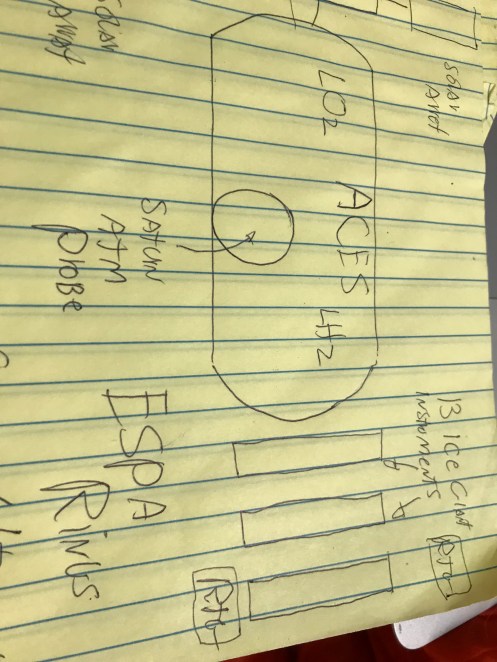
(E) the ESPA rings are about 5.4 meters < to match that of the ACES both aft and forward bulkhead some of the most foreword ESPA rings can be smaller(landers)
(F)The aft ESPA ring has electrical connections to the IVF controller and deploys a solar array that powers a SEP engine, RTG only powers science and avionics & comnav. Keep this solar array for Saturn missions jettison for Uranus Neptune.
(G) The ACES propellent intertank regions can carry atmosphere probes
(H) ACES that does Venus Earth Earth trajectory to the outer planets benefit from a Methane LH2 gell to lower boil off

Can some of the ACES R&D come under the mission cap of Discovery 2019? Or could NASA infuse future Cryogenic technologies to infuse as government furnished equipment?
18-Mustafi (TOPS)
NEXT SEP Ion engine has already been approved for Infusion at no cost to the AO mission costing cap Unlike TOPS and We would propose that we need to model a 7-ton ACES dry mass at Neptune how much cryogenic Xenon Oxygen and Hydrogen would get the job done.
 Let us see who can show if anyone came up with this idea first! My powerpoint is from the fall of 2011 and was proposed to SpaceX on 21 11 2011
This is the powerpoint sent to SpaceX below
The OPAG Ice Giant study group has 13 science instruments and avionics/comnav cost engineered at $700 million this comes out to $54 million per instrument. Our business model would be to divide up this cost in 3 to 4 ways. Dividing up the instruments 4 ways places about 3 instruments in each group of cost engineered funding payment modes.
(A)(1) mode one is the NASA Salmon instrument flight opportunity where 3 instruments fly for 1/4th the total mission costs or about $250 Million. This would be competitively put out through a salmon AO. The question would be wich instruments the NASA customer want to use for this process? All 13 instruments and three are chosen or NASA picks out three instruments for the AO bid process?$250 Million mostly upfront in early phases of the spacecraft build over 5 years before launch.$50 Million per year. This could also be an in-kind Salmon purchased instruments that pay a rideshare fee or $17 Million per year per instrument.
(A)(2) NASA data purchase of $250 Million payable over the life of the Mission of 15 years from three additional instruments, $17 Million per year over 15 years
(A)(3) The International community up for three to four instruments equipment in-kind with a rideshare fee payable to us equivalent to the costs of the launch vehicle and ACES at 1/4th and operations costs plus a profit. So an in-kind donation of $250 million for science payloads
(A)(4) Some instruments are within reach of private foundations and university indeed some instruments might be cheaper than University funded telescopes. Three smaller instruments like the ice giant study groups proposed Magnatometer could be in-kind equipment with a rideshare fee
Terrestrial & Cislunar Exploration technologies borrow $1.3 Billion that accrues to a Leveraged ESOP. Deductions are made to this sum for in-kind equipment transferred to the project. As many as 6 instruments might be in-kind so between $300 to $400 Million need not be borrowed by the leveraged ESOP. In the case of the 3 instruments that we are selling data with the ESOP company would purchase these along with the ULA ACES spacecraft. What instrument has the most data values? would the customer be willing to pay for that additional value? To us, the most valuable instruments would be science imaging cameras. The ESOP company would hire our own PI for these, however, we would like to point out that idea from previous posts on this blog that those PI’s would be co-employees with the ESOP and their home institutions. As the ESOP debt is paid down the science investigators and engineers would vest in the success of the ESOP pension plan
Our goal would be to use profits earned after ESOP debt retirement and employee pension payouts to invest in the serial production of more ACES/ESPA spacecraft and those instruments we have purchased, ICE giant spacecraft should be able to share the same 13 instruments at Neptune Uranus and a return to Saturn ditto Jupiter flyby science in route
Last week we wrote about a ULA ACES with ESPA rings both forward and aft of the ACES the aft ESPA ring held connections for an ACES solar array that powers a onboard SEP engine. The Xenon is kept cryogenic to save the weight of the propellant tank mass and is cryocooled by the ACES LH2 After 5 AU the solar array/ESPA ring detaches. In the case of Saturn, we keep this solar array ring so that some RTGs can descend to Titan with an ESPA ring in a floating HIAD on a Titan sea. Hopefully, the very long descent by parachute would allow the HIAD to cool 🙂 The HIAD is our flotation mechanism and the ESPA ring provides the structure to the landed instruments. Perhaps a modest submarine on a tether could be deployed and retrieved
Year 1 Year 2 Year 3
$17 Million
$17 Million in progress………….
$17 Million
$17 Million
In-kind furnished instruments with rideshare fee

.
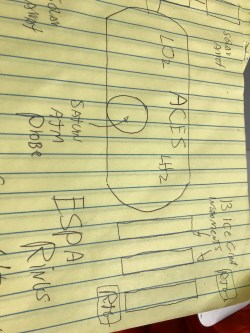
ULA ACES with three ESPA rings, one aft deploys a solar array two forewords of the ACES dome host Saturn Titan science payload
The foreword most ESPA ring detaches and inflates a HAID for Titan EDL and is designed to float and deploy a small tethered submarine.Possibly the HAID is deployed beforehand with the Cryogenic Xenon tank and is used to circularize the orbit of Titan
Let’s borrow the $700 Million cost engineering figure for 13 instruments at 150 Kg and deep space avionics and com/nav from the Ice Giants study group report and add the Vulcan Aces for an even $1 Billion?
This post is a part of a family of ideas that beat the cost engineering of the Ice Giant study report
Cost engineering and Leveraged ESOP funding
ULA ACES upper stage as planetary probe
ACES with MOOG ESPA rings with the Ice giant study report 150 Kg science payload to 500 days Neptune orbit insertion(Lower energy) ACES needs deepspace avionics and com/nav and HGA and the RTG’s, Use Triton to lower Apogee from 500 days to 30 day orbits & collect Triton ROW world ocean data with close flybys
Fly ACES with deep space JPL quality COM Nav and additional data and computer plus software onboard the ACES stage $? Million
OPAG Ice Giant study group 150 Kg science payloads are costed at $360 Million, these perhaps could be arrayed around an ESPA ring and the foreword ACES dome.The Ice Giant study report had the spacecraft avionics and com/nav at another $400 Million for an ice giant deep space mission.An assumption might be that ACES with the above payload would cost $760 Million
This deepspace ACES might need a Hypergolic station keeping system along with the science instrument RTG requirements
ACES as a planetary spacecraft is the new model of the old Mariner Mark – II idea of serially produced deepspace spacecraft its also a gamble can ULA participate with the Terrestrial & cislunar exploration technologies company ESOP in a leveraged funded loan purchase of ULA products? can we sell ride share and or data collected from a deep space planetary mission?
Solar arrays also attached to an ESPA ring and it powers a SEP engine out to 5 AU, keep or jettison? cryogenic Xenon cooled by ACES LO2 expended by the time 5 AU is reached to bring the most chemical propellant to the Ice Giant ROW Pluto systems.SHERPA is an ESPA with its own engine and station keeping so both Ice Giants could have two spacecraft in orbit
ACES as planetary probe replaces the Mustafi Idea
Can A Europan lander Geophone detect bioacoustics produced by life through 30 kilometers of ice?
far fetched yes? 🙂 biological acoustics through 30 kilometers of European ice is a lot to hope for but how could it be done? There may be water in places closer to the surface.
The Proposed Europa lander suggests the use of a geophone to listen for the geological evidence of an ocean
http://faculty.washington.edu/wilcock/files/PaperPDFs/wilcocketal_annrev_2014.pdf
Whales are well known to produce sound, Does Europa even come close to having the energetics to evolve Metazoans?
http://asa.scitation.org/doi/abs/10.1121/1.4904556
Shrimp are Acoustically among the loudest on Earth
Small metazoans are more likely but this requires O2 right?
Panning Et al are hoping to listen to geological sounds at Europa
looking for Ocean sounds at Europa
EDIT 13 Sept 2018
Dr. Chris McKay told us “No” to a question I posed to the Europa Lander panel at OPAG Pasadena as to whether a Lander Geophone could detect Bioacoustics. I am not sure if he meant no to the instrument can or to whether it would
In my question, I stated that Bioacoustics is produced by Metazoans and those require nutrients and an energy state in an ocean to exists. I suspect those don’t exist and that those ROW worlds are full of protists.
I also said Bioacoustics from an alien world well how would we know it?
also is it a detection or a biosignature?
I would argue a positive finding would be a bio-detection My comments came after Dr. Bolten talked for about 10 minutes 🙂
 Yellow Dragon, a mission to repurpose existing ideas into new ideas